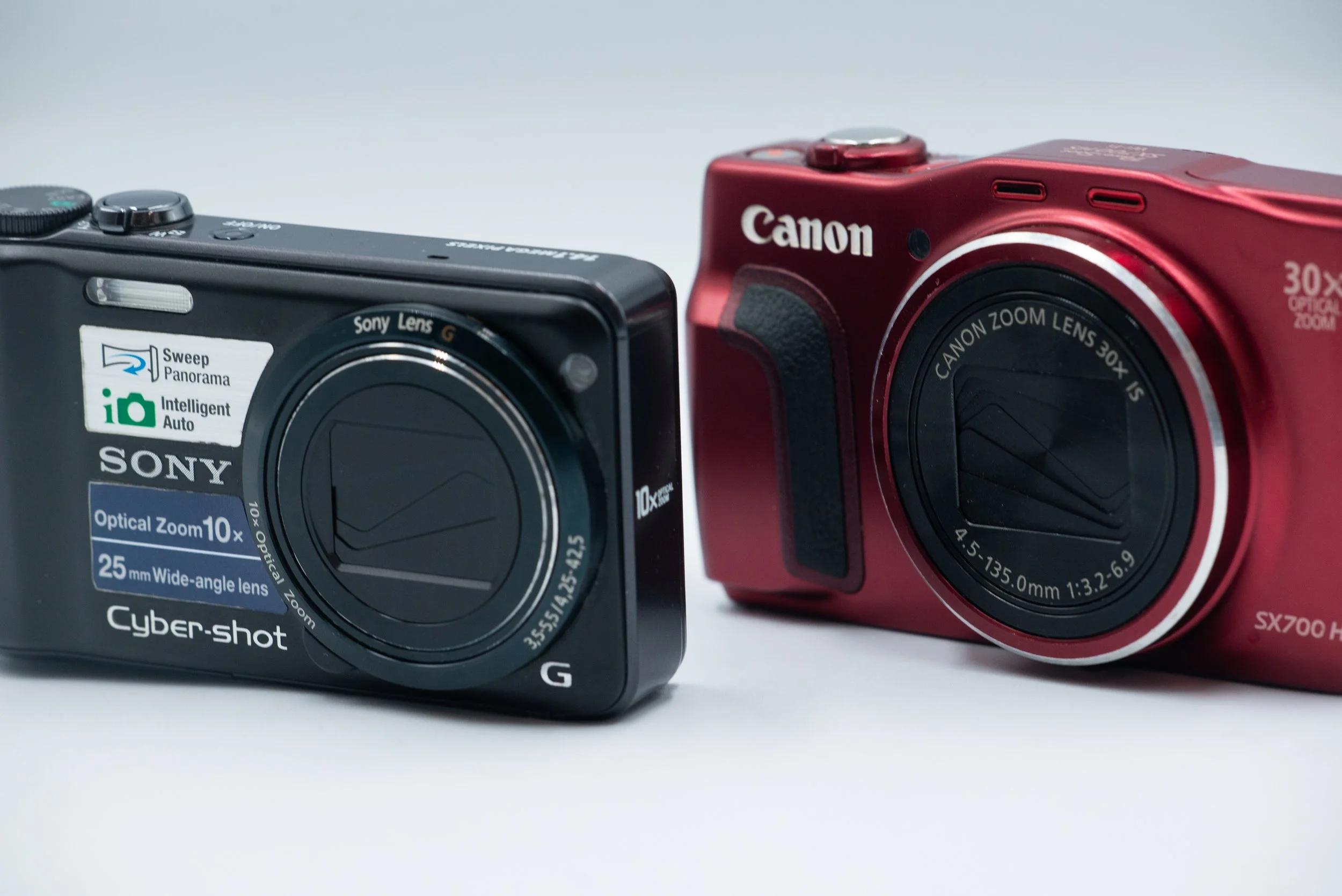
Canon SX700 HS vs Sony Cyber-shot H55: Is Twice the Price Twice the Camera?
Two Pocket Cameras, Two Very Different Prices
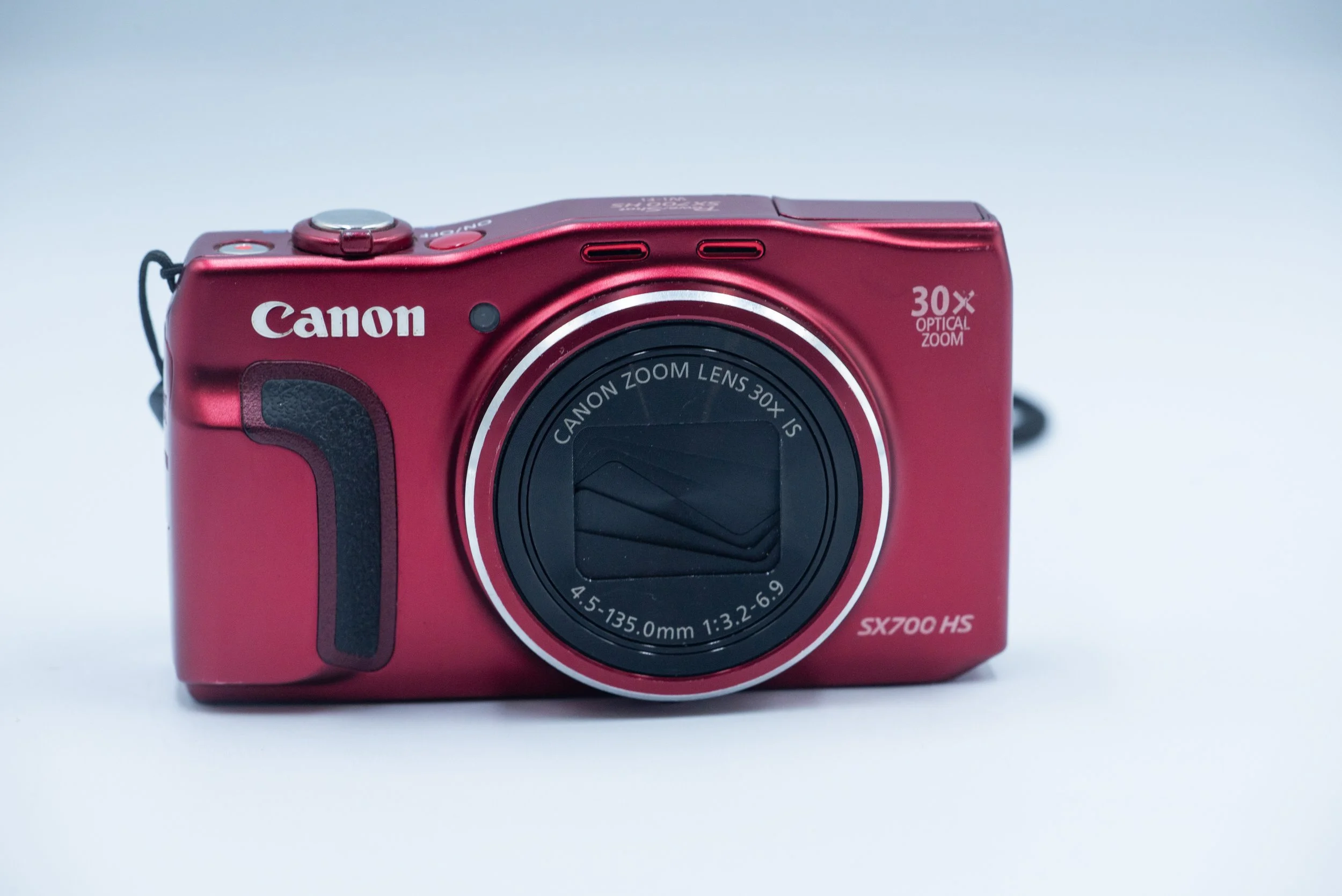
Canon PowerShot SX700 - Specs
Sensor: 16.1 MP 1/2.3" CMOS
Processor: DIGIC 6
Lens: Canon 30x optical zoom
Focal Length: 25–750mm equivalent
Maximum Aperture: f/3.2–6.9
Image Stabilisation: Optical Image Stabilizer
ISO Range: ISO 100–3200
Shutter Speed: 1–1/3200 sec
Screen: 3.0" LCD, approx. 922,000 dots
Video: Full HD 1080p at up to 60fps
Continuous Shooting: Up to approx. 8.5 fps
Autofocus: Contrast-detect AF
Flash: Built-in pop-up flash
Connectivity: Wi-Fi and NFC
Storage: SD / SDHC / SDXC memory cards
Battery: Canon NB-6LH rechargeable lithium-ion
Dimensions: Approx. 112.7 × 65.8 × 34.8mm
Weight: Approx. 269g including battery and memory card
Release: 2014
Real World Review
This camera is still as relevant today as it once was back in 2014 - with its powerful 30x optical zoom and almost full manual control, if a little clunky.
I would mostly use this camera as a simple point and shoot camera for those wanting to explore a little more than just using their phone camera (which depending on the camera can be better). But with its 16.1MP sensor, 25-750mm equivalent zoom and optical image stabilisation, there is a lot more camera here than you might first expect.
It’s small, robust and easily fits into a large pocket and uploading your images to your chosen social media platform couldn’t be easier with its Wi-Fi and NFC connectivity. It’s also no slouch in the video department with 1080p at up to 60fps, although like many cameras of this era, battery life can become an issue when recording video.
Price - £230ish
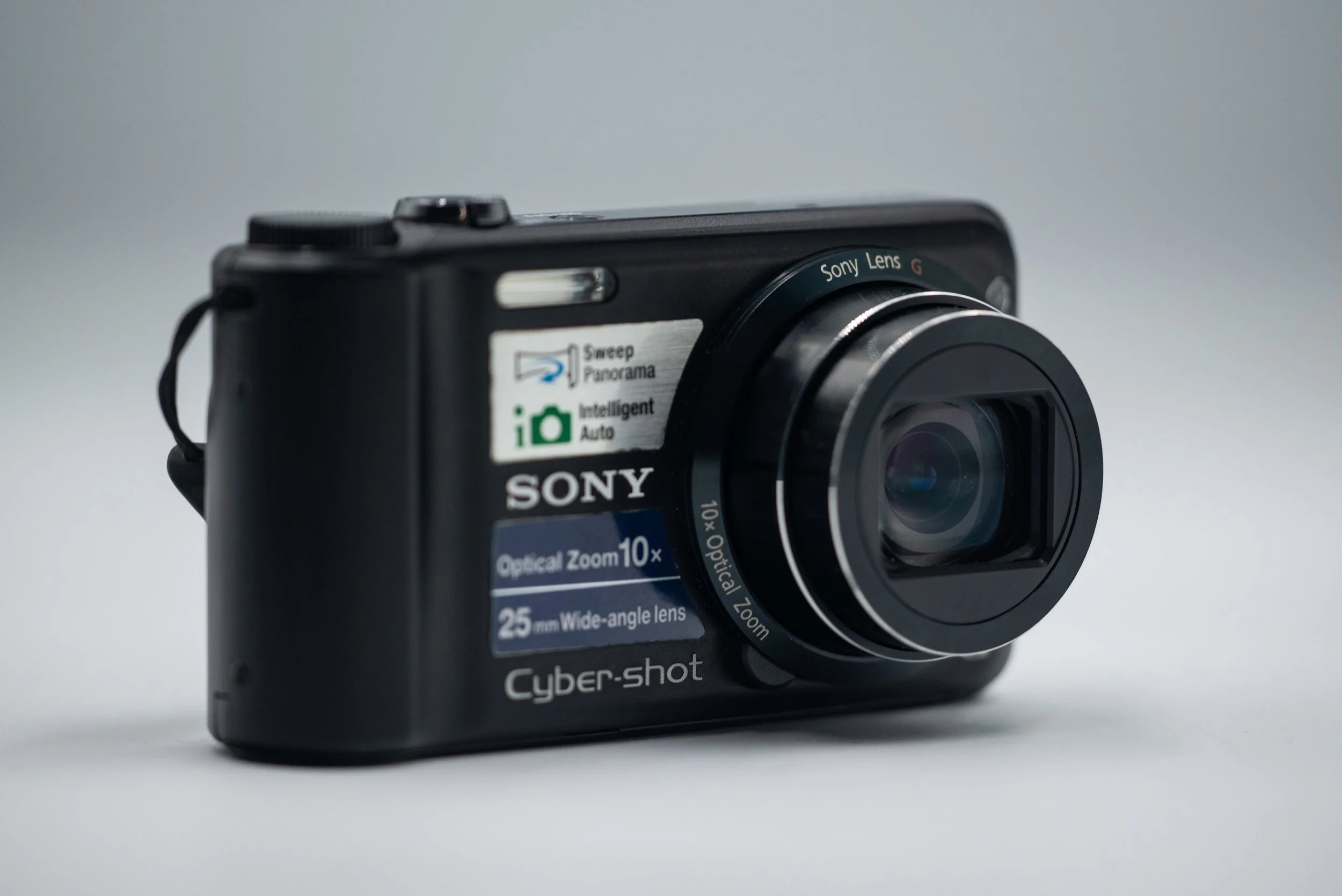
Sony DSC-H55 Specs
Sensor: 14.1 MP 1/2.3" Super HAD CCD
Lens: Sony G Series 10x optical zoom
Focal Length: 25–250mm equivalent
Maximum Aperture: f/3.5–5.5
Image Stabilisation: Optical SteadyShot
ISO Range: ISO 80–3200
Screen: 3.0" LCD, approx. 230,400 dots
Video: 720p HD video
Continuous Shooting: Approx. 1.1 fps
Autofocus: Contrast-detect AF
Flash: Built-in flash
Storage: Memory Stick Duo/PRO Duo and SD/SDHC/SDXC
Connectivity: USB 2.0, A/V output
Battery: Sony NP-BG1 / NP-FG1 rechargeable lithium-ion
Dimensions: Approx. 102.7 × 57.0 × 28.7mm
Weight: Approx. 200g including battery and media
Release: 2010
Real World Review
Despite being 4 years older than the SX700 the H55 is still a very capable camera. 10x optical zoom, 14.1MP and Optical SteadyShot makes this very suited for snapshots. Like the SX700 it still offers limited manual functionality, but no Wi-Fi or NFC, so transferring your photos to a computer or phone will need to be done manually.
This camera’s biggest selling point over the SX700 is the price. At around the £90 mark it’s less than half the price and seriously not that much less of a camera.
Honestly, its automatic systems are in a league of their own. The iAuto system is able to detect the correct scene, while its autofocus and face detection help keep the subject in focus. For a simple point and shoot camera, it really is hard to fault at this price.
Price - £90ish
Conclusion
So which one would I choose? Honestly, that depends on what you actually want from the camera.
The Canon SX700 is the more capable camera on paper. The 30x zoom, better video, Wi-Fi, NFC and greater manual control give it a lot more to play with, especially if you want something that can do more than just point and shoot.
But then you have the Sony H55. It’s older, has less zoom and fewer features, but at around £90 it costs less than half as much as the SX700. For someone who simply wants a small camera with a decent zoom, good image stabilisation and very good automatic modes, that price difference is difficult to ignore.
Both cameras do what they were designed to do and both have their place. The SX700 gives you more camera to grow into, while the H55 gives you a lot of camera for the money.
And ultimately, that’s what makes this comparison interesting.
Below is a selection of shots taken on both camera’s. The first 1st is from the SX700 whilst the next one is from the H55. The images show the cameras' straight-out-of-camera output rather than the quality of my photography.